
Purchasing a boom lift is only the beginning of its operational lifecycle. For contractors, equipment rental companies, and industrial maintenance teams, long-term productivity depends on more than initial performance or acquisition cost. Timely servicing, reliable spare-parts access, and technical assistance all influence how consistently a machine can work across demanding projects. Evaluating these factors before purchasing helps businesses manage downtime, maintenance budgets, and equipment availability more effectively.
Why After-Sales Support Affects Equipment Productivity
A boom lift may operate across construction sites, industrial facilities, and infrastructure projects where delays can affect several connected activities. When a machine develops a hydraulic, electrical, or mechanical fault, work may stop until technicians identify the problem and complete repairs. The resulting costs can include idle labor, rescheduling, equipment substitution, and missed deadlines.
Reliable service access helps reduce uncertainty during these situations. Qualified technicians can diagnose faults, advise on maintenance procedures, and identify the components required for repairs. For businesses operating multiple machines, consistent technical support also helps maintenance teams establish repeatable inspection practices and manage service requirements across their fleets.
This consideration is especially important when purchasing a diesel boom lift for outdoor construction or industrial applications. Regular inspections and timely repairs help maintain operational readiness, while documented maintenance provides a clearer picture of equipment condition over time.
Spare Parts Availability and Maintenance Planning
Parts availability directly affects how quickly equipment can return to service after a failure. Even a relatively straightforward repair can take longer when replacement components must be identified, ordered, or transported over long distances. Businesses should therefore investigate parts distribution arrangements before committing to a particular machine or supplier.
When comparing boom lift manufacturers, buyers should ask whether genuine replacement parts are available locally, how parts orders are handled, and whether technical teams can help identify components by model and serial number. They should also clarify warranty coverage, component lead times, and the process for obtaining parts that are not routinely stocked.
Zoomlion’s official parts information describes a global distribution network that includes parts centers, national warehouses, and distribution warehouses. This infrastructure is relevant to buyers assessing parts support, although actual availability and delivery times depend on the specific component, location, and order requirements.
Matching Service Capabilities to Machine Requirements
Not every access platform has the same maintenance needs. Engine systems, hydraulic circuits, lifting structures, controls, and safety devices require appropriate inspection procedures and qualified personnel. A supplier’s ability to provide model-specific documentation and troubleshooting guidance can therefore be as important as the availability of replacement parts.
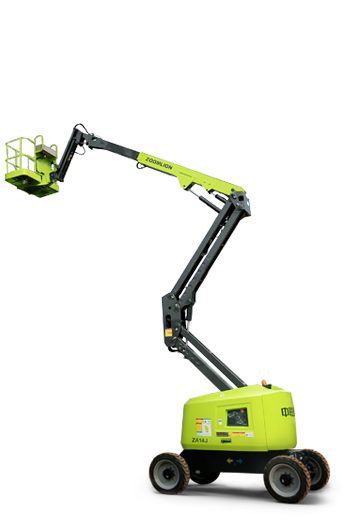
The Zoomlion Access ZA14J is a diesel-powered articulating boom lift designed for precise positioning and flexible access. Its maximum working height is 15.80 m, making its reach specification relevant when contractors evaluate elevated maintenance, installation, and construction tasks. The official product page also lists an integrated rotary reducer for improved rotation stability, protection for dusty environments, and a deadweight lowering system designed for smoother operation and energy efficiency.
These features should be considered alongside the machine’s service requirements. For example, equipment operating in dusty environments may need maintenance intervals and inspection practices suited to actual working conditions. Buyers should confirm the applicable procedures in the manufacturer’s manual rather than assuming that protective features eliminate the need for regular servicing.
Evaluating Service Support Before Purchase
A structured supplier assessment can reveal whether after-sales arrangements fit a company’s operational requirements. Buyers should evaluate several areas rather than relying on broad promises of comprehensive support.
Technical response: Confirm how service requests are submitted, how faults are assessed, and whether remote troubleshooting is available.
Parts logistics: Ask about local stock, order tracking, delivery arrangements, and support for less common components.
Maintenance documentation: Check access to operator manuals, maintenance schedules, parts catalogs, and troubleshooting instructions.
Warranty clarity: Review coverage periods, exclusions, claim procedures, and responsibilities for labor and replacement components.
Training and service capability: Determine whether operators and technicians can access appropriate training and qualified repair support.
These questions help procurement teams compare suppliers on practical service capabilities, not simply on equipment specifications or purchase price. They also give rental businesses a stronger basis for estimating maintenance costs and planning fleet availability.
Reducing Downtime Through Preventive Maintenance
Preventive maintenance helps identify developing problems before they lead to more disruptive failures. Depending on the machine and manufacturer’s schedule, maintenance may involve checking hydraulic hoses, inspecting structural components, reviewing engine and fluid condition, testing controls, and examining tires and other running gear. Service records help teams track completed work and identify recurring issues.
For a diesel boom lift, maintenance planning should reflect operating hours, site conditions, and the manufacturer’s recommendations. Machines working in dusty or demanding environments may require particular attention to cleaning and inspection. Maintenance intervals should never be extended simply to keep equipment available for another shift.
Safety inspections remain equally important. The US Occupational Safety and Health Administration recommends checking aerial lifts before each work shift and following manufacturer instructions for safe operation and maintenance. Defective equipment should be removed from service until appropriately repaired.
Calculating the Long-Term Value of Supplier Support
The lowest purchase price does not necessarily represent the lowest total cost of ownership. Procurement teams should consider routine servicing, expected component replacement, labor, transport, equipment utilization, and potential downtime over the machine’s service life. Reliable support can make these costs easier to forecast, although actual savings depend on operating conditions and service performance.
When evaluating boom lift manufacturers, fleet owners should compare documented service arrangements and parts access alongside machine capabilities. A supplier that provides clear maintenance information and responsive technical assistance can help businesses make better-informed decisions about repair timing, replacement planning, and fleet allocation.
For the ZA14J, buyers should review the official specifications and confirm local support arrangements with the relevant distributor before purchase. Questions about warranty coverage, service availability, and replacement-part lead times are best resolved in advance, particularly when equipment will be deployed on projects with strict completion schedules.
Building a Stronger Ownership Strategy
Long-term boom lift performance depends on the relationship between machine design, maintenance discipline, and supplier support. By assessing parts availability, technical assistance, preventive maintenance requirements, and warranty conditions before purchase, businesses can reduce avoidable uncertainty and plan equipment use more effectively. The Zoomlion Access ZA14J offers a specific model for evaluating reach and operating features, but its overall value also depends on suitable servicing and parts arrangements. A lifecycle-focused purchasing decision supports safer operations, more predictable maintenance, and stronger fleet planning.