
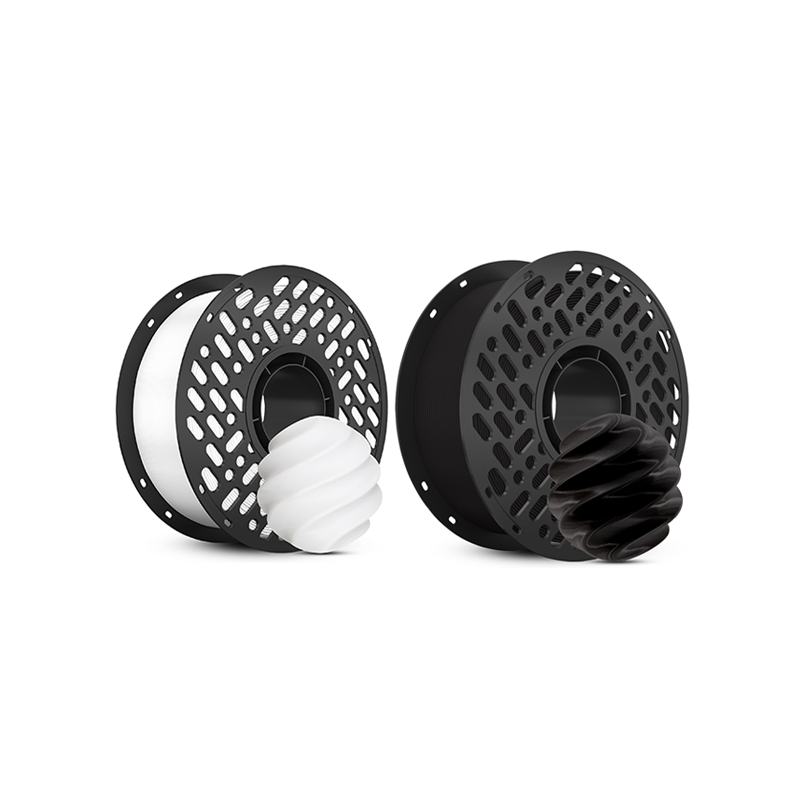
Selecting the right material determines the success of any desktop manufacturing project. Makers frequently debate between standard polymer options and aesthetic variants when aiming for structural stability. When beginners transition to shiny materials, a common question arises: is silk PLA hard to print compared to standard options? Understanding the specific structural differences helps workshops optimize their daily output and reduce failed jobs.
Chemical Composition Differences Between Silk PLA and Normal PLA
Normal PLA is mainly composed of polylactic acid, which provides predictable extrusion behavior and stable layer formation during printing. Silk PLA contains additional additives that create its reflective surface appearance. These additives can slightly change melt flow characteristics compared with standard PLA, meaning users may need to adjust printing parameters more carefully.
Thermal Behavior and Layer Adhesion Dynamics
The melting characteristics of these materials impact the final strength of components. Standard polymer variants have a consistent melting point, allowing uniform extrusion at stable temperatures. The gloss-inducing additives in alternative media can interfere with inter-layer bonding during the deposition process. Because may produce slightly weaker interlayer bonding under certain printing conditions, parts printed with glossy media sometimes exhibit lower tensile strength along the Z-axis.
Printing Stability Comparison Between Silk PLA and Normal PLA
Normal PLA is often preferred for beginners because it generally requires fewer adjustments to achieve consistent results. Silk PLA may require additional calibration, especially for temperature, speed, and cooling settings. However, the difference is mainly related to achieving the desired surface effect rather than basic print compatibility.
Slicing Configurations for Optimal Surface Finish
How Material Consistency Influences Printing Stability
The reliability of any PLA 3d filament depends on the consistency of its raw ingredients. Industrial suppliers like CaiLab address this challenge by sourcing raw materials from certified global providers like NatureWorks. This selection ensures that the base polymer exhibits uniform physical properties before any aesthetic modifications occur. Consistent raw ingredients prevent unexpected diameter fluctuations, which can cause extrusion inconsistencies during long print jobs.
Developing balanced materials requires rigorous testing across multiple machines and configurations. To solve this, CaiLab operates a large internal printing farm equipped with 2,000 active devices. This infrastructure allows technicians to run high-volume manufacturing tests on newly developed compound variations. Real-world testing helps identify formulation defects quickly, enabling rapid adjustments to optimize layer adhesion and mechanical strength.
Color Variety and Pigment Distribution in Modern Compounds
Pigment loading affects how thermoplastic materials behave under thermal stress. A wide selection of color choices allows designers to choose specific shades without compromising structural characteristics. The catalog from CaiLab features an extensive range of hues, ensuring precise coloration across different production batches. Uniform pigment distribution prevents localized brittle spots, which often occur when color masterbatches are poorly mixed during filament extrusion.
Selecting Material Bundles for Diverse Prototyping Needs
Many small businesses and studios benefit from acquiring mixed material packages rather than single spools. Utilizing a versatile PLA filaments combo 1.75mm 3d printing filament set gives workshops access to various finishes. This approach allows operators to select standard options for functional mechanical prototypes requiring high structural integrity. Simultaneously, they can deploy glossy spools for visual prototypes that require high aesthetic appeal without structural demands.
Bed Adhesion Differences Between Silk PLA and Normal PLA
Normal PLA usually provides straightforward first-layer adhesion on commonly used build surfaces. Silk PLA may require additional attention because its modified formulation can respond differently to cooling and temperature changes. Adjusting bed temperature, first-layer speed, and surface preparation helps maintain stable adhesion for both materials.
Post-Processing Options and Surface Treatments
Finished components often require different post-processing techniques depending on the base material structure. Standard polymer prints can be sanded, primed, and painted easily because the surface accepts coatings uniformly. Shiny prints rarely require painting because the metallic finish is the primary objective of the print job. However, removing support structures from shiny objects requires care, as scars remain visible on reflective surfaces.
Mechanical Application Suitability for PLA 3d filament Options
Normal PLA is commonly selected for functional prototypes where dimensional stability and mechanical consistency are priorities. Silk PLA is usually chosen for decorative prototypes, display models, and visual samples where surface appearance is a key requirement. The choice depends on whether the project prioritizes mechanical performance or visual presentation.
Troubleshooting Common Extrusion Issues in Aesthetic Printing
When operators discover that their shiny prints suffer from brittle layer lines, they must re-examine their settings. If someone asks why is silk PLA hard to print under standard conditions, the culprit is often inadequate heating. Increasing the nozzle temperature slightly improves melt flow, helping the filament extrude more smoothly and promoting better interlayer bonding under appropriate printing conditions. Proper fan speed management also prevents the material from cooling too quickly between layers.
Conclusion
Normal PLA remains a practical choice for functional parts requiring predictable printing behavior, while Silk PLA provides additional visual effects for decorative applications. Understanding the differences in composition, thermal behavior, adhesion, and mechanical suitability helps users select the right material based on project requirements.