
Utility-scale tracker sourcing places product design and organizational delivery under the same test. A technically suitable row can still create project risk if drawings arrive late, production lacks traceability, logistics are poorly coordinated, commissioning support is limited, or replacement parts become difficult to obtain.
Comparisons among single axis solar tracker manufacturers should combine site-specific engineering, validated equipment, manufacturing capacity, construction services, intelligent control, and lifecycle commitments. Antaisolar supports TAI-Simple through design, testing, production, installation guidance, commissioning, monitoring, maintenance, and spare-parts arrangements.
Confirming the Offered Tracker Fits the Site
The supplier’s proposal should respond to wind, snow, seismic demand, terrain, module dimensions, string layout, geotechnical conditions, corrosion exposure, grading limits, and adopted standards. Generic calculations or reference projects cannot replace a model of the actual row, drive, damping, foundation, and module configuration.
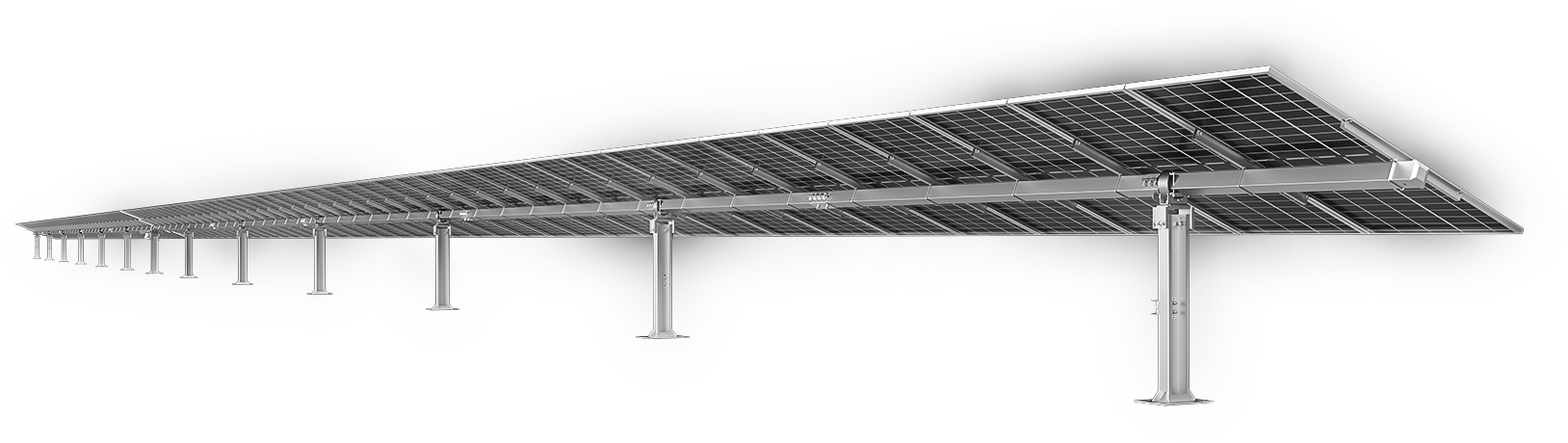
TAI-Simple uses a single slew drive, independent 1P rows, dual-sided symmetrical damping, and terrain-aware control. Published limits include a 97-meter row, plus or minus 60-degree tracking, 55-meter-per-second wind resistance under ASCE 7-10, and north-south slope tolerance of 20 percent or 11 degrees.
Module and foundation flexibility require evidence. The platform can carry up to 90 large-format modules, while foundation selection may follow pull-out testing and pile-on-tolerance evaluation. Structural submittals should identify reactions, embedment assumptions, adjustment ranges, failure modes, and any conditions that change standard quantities.
Antaisolar provides rapid design, automated project optimization, pull-out and POT testing, and flexible foundation support. The buyer should define calculation review dates and approval gates early so engineering changes do not reach production after materials, drive locations, or pile schedules have been released.
Auditing Production and Construction Readiness
Manufacturing due diligence should cover plant capacity, critical suppliers, inspection plans, material traceability, coating control, weld procedures, dimensional tolerances, controller configuration, calibration, and nonconformance closure. Factory acceptance testing needs witnessed functions and measurable limits rather than a general product demonstration.
A combination of up to 45 percent pre-assembly and a 16 percent column reduction can shorten site work. Its commercial value depends on packaging, container loading, row-level labels, transport restraints, lifting points, assembly access, crew balance, and the treatment of short or irregular rows at project boundaries.
With 25 GW of annual capacity and eight delivery and service centers, Antaisolar presents a substantial supply footprint. The contract should still identify the assigned factory, production slot, lead times, inspection access, shipping responsibilities, local inventory, and recovery plan for late or nonconforming equipment.
Installation and commissioning support should include site surveys, training, approved manuals, torque requirements, pile-tolerance procedures, row alignment, control setup, functional tests, and signed handover records. A field trial before full mobilization can verify labor assumptions and expose interface problems while corrections remain manageable.
Contracting for Operational Continuity
Controls deserve the same diligence as steel. The rotary motor has published accuracy of plus or minus two degrees and a 25-year design life for drive components. SmartTrail adds backtracking, monitoring, predictive protection, wireless communications, and backup lithium batteries, all of which require version-controlled acceptance criteria.
Warranty language should state covered components, start dates, exclusions, remedies, labor and freight responsibility, response times, required maintenance, and evidence for claims. Extended options can be useful only when the contracting entity, service organization, and spare-parts route remain clearly identified.
Owners also need training, remote or onsite maintenance choices, event records, cybersecurity controls, data access, software support, and an escalation path. Service performance can be measured through acknowledgement time, diagnosis time, parts availability, restoration targets, and recurring-fault review.
Reliable single axis solar tracker manufacturers convert capability into traceable project obligations. That framework allows project teams to assess Antaisolar by linking TAI-Simple’s technical limits to factory records, construction deliverables, acceptance tests, and service commitments that remain enforceable after commercial operation.