
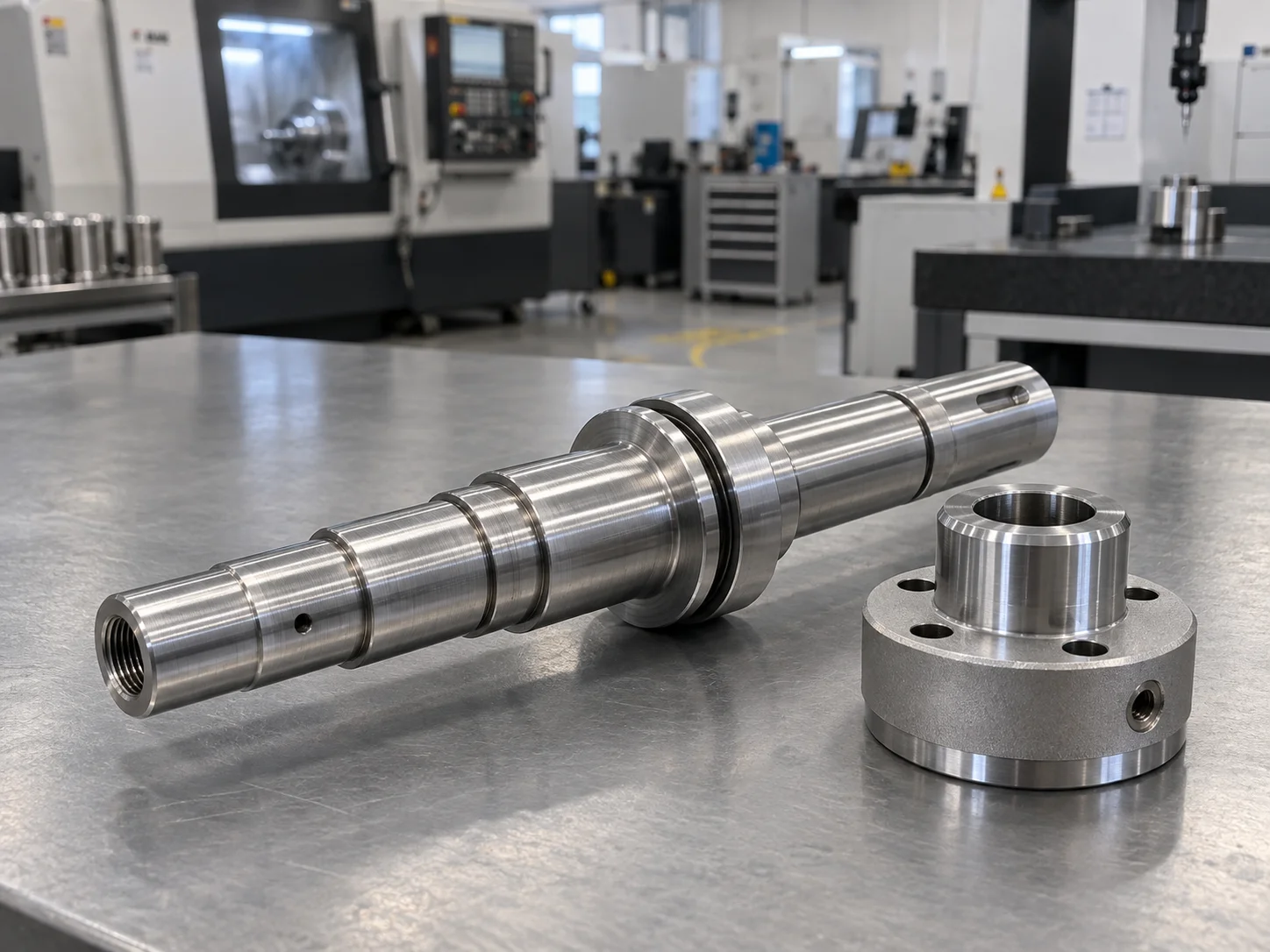
A CNC turning online quote can provide a fast way to estimate the cost of shafts, pins, bushings, sleeves, connectors and other rotational components. However, an online quotation should not be evaluated only by its final total. The quoted price reflects several interconnected factors, including part geometry, production quantity, material, tolerances, surface finishing and secondary operations.
Understanding what drives each part of the quotation helps you compare manufacturing options more accurately and identify where cost can be controlled without compromising the function of the component. With HordRT, customers can upload CAD files, configure project requirements and request pricing online, while its engineering team reviews key manufacturing requirements before production.
Look Beyond the Total Price
The first number most purchasers notice is the total project price. Yet the total alone does not explain why one quotation may be higher or lower than another.
A useful CNC turning quote should be considered together with the unit price, quantity, material, tolerance requirements, finishing specifications and any additional machining processes. Lead time and inspection requirements may also influence the overall manufacturing arrangement.
For example, a quotation for 10 precision shafts cannot be compared directly with a quotation for 500 standard shafts simply by looking at the unit price. Production volume changes how setup and machining costs are distributed across the order.
HordRT supports prototype, low-volume and repeat production without a minimum order quantity, allowing different production stages to be evaluated according to actual project requirements.
Quantity Has a Direct Impact on Unit Cost
Quantity is one of the most important elements in a CNC turning online quote. A small prototype order generally carries a higher unit cost because programming, setup and preparation costs are distributed across fewer parts.
As quantity increases, these initial costs can be spread over more components. This does not mean that every high-volume order automatically receives the same reduction, because material consumption, cycle time, tooling and inspection requirements still affect the final price.
When reviewing a quote, therefore, compare unit pricing at the same quantity level. If your expected demand may increase later, asking for pricing at several production quantities can also help with purchasing and production planning.
Part Geometry Determines Machining Effort
The shape of a turned component has a direct relationship with machining time. A simple cylindrical shaft with a few diameters may require fewer operations than a component containing multiple steps, grooves, holes, threads and tight dimensional relationships.
Diameter and overall length also matter. Large or unusually long parts may require different workholding arrangements and machining conditions. Small features can require additional tooling or operations.
HordRT provides CNC turning for shafts, pins, bushings, sleeves and other cylindrical components, with an emphasis on dimensional control and repeatable production. Its broader CNC capabilities also include milling and multiaxis machining when a turned component requires additional features.
Tighter Tolerances Can Increase Manufacturing Cost
Tolerance is another key factor when reading a CNC turning quote.
A general dimensional tolerance may be sufficient for noncritical features, while bearing surfaces, mating diameters and other functional interfaces may require tighter control. More demanding tolerances can require additional process control, inspection and machining considerations.
HordRT states that selected critical metal features can reach tolerances down to ±0.025 mm, subject to material, geometry, feature size and engineering review. Its quality support can include CMM inspection, first article inspection and dimensional inspection reports depending on project requirements.
This makes it important to distinguish between functional tolerances and unnecessarily tight tolerances. Specifying the correct tolerance for each feature can help balance performance and manufacturing cost.
Material Affects More Than Raw Material Cost
The material listed on a CNC quote is not simply a line item for raw material. Its machinability can influence tooling, cutting conditions, cycle time, surface quality and finishing requirements.
Aluminum, stainless steel, carbon and alloy steel, titanium, brass, copper and engineering plastics can require different machining approaches. HordRT supports a broad range of metals and engineering plastics and evaluates material selection according to mechanical, dimensional and finishing requirements.
When comparing quotations, make sure the material grades are identical. A lower quote based on a different material is not necessarily a meaningful cost comparison.
Check Surface Finishing and Secondary Operations
A CNC turned component may require more than machining. Anodizing, bead blasting, polishing, plating, powder coating, passivation, heat treatment or laser engraving can be added after the primary machining process.
These processes can affect the final quotation because they introduce additional processing, handling and inspection requirements. Some finishes can also require machining allowances when critical dimensions must remain within specification.
HordRT offers several surface finishing options and can consider finishing allowances during engineering review.
When reading a quote, confirm whether the listed price includes the required finish and any secondary operations. This prevents an apparently low machining price from becoming a higher final cost after additional processes are added.
Compare Lead Time and Engineering Support
Price is important, but purchasing decisions also depend on how quickly a component can move from design approval to production.
HordRT’s online CNC quoting platform allows customers to upload 3D CAD files and supporting 2D drawings, specify material, quantity, tolerance and finishing requirements, and submit the project for pricing and engineering review. The company states that selected CNC machining projects can have lead times as fast as 5 to 10 working days after requirements are confirmed.
Engineering review is particularly useful when a part contains tight tolerances, complex geometry or specialized finishing requirements. A quotation that clearly connects price with manufacturing requirements can make supplier comparison more practical.
Make Every Quote Easier to Compare
A CNC turning online quote is more useful when you understand what is behind the final number. Quantity influences how setup costs are distributed. Geometry affects machining time. Material affects processing conditions. Tolerances influence precision and inspection requirements. Finishing and secondary operations add further processing costs.
HordRT combines an online quoting platform with CNC turning, CNC milling and multiaxis machining capabilities, along with engineering review, inspection support and surface finishing options. Customers can submit CAD files and project specifications online and receive a quotation based on the actual manufacturing requirements rather than relying on a basic unit-price estimate.
For a more informed purchasing decision, read the entire quotation as a manufacturing plan, not simply a price tag. When the cost, technical requirements and production conditions are considered together, it becomes easier to identify a quotation that fits both the component’s performance requirements and the project’s production plan.