
Investing in digital dentistry is no longer simply a question of purchasing advanced equipment. For dental clinics and laboratories, the more important question is whether a digital workflow can generate measurable value through improved efficiency, higher case capacity, reduced rework, and better resource utilization.
A successful digital strategy should therefore look beyond individual scanners or printers. It should consider how data moves from acquisition to design and manufacturing, how easily staff can operate the workflow, and whether the technology can support a growing range of applications. With the right approach, digital dentistry solutions can become an important part of a sustainable operational strategy.
Start with the Workflow, Not the Equipment
One common mistake when evaluating digital technology is focusing too heavily on individual product specifications. High scanning accuracy, printing speed, or software functions are important, but their financial value depends on how effectively they fit into the complete workflow.
A digital dental workflow typically connects three core stages: scanning, design, and manufacturing. When these stages work together, digital patient data can move more efficiently through diagnosis, treatment planning, restoration design, and production. This can reduce unnecessary data transfers, manual duplication, and communication gaps.
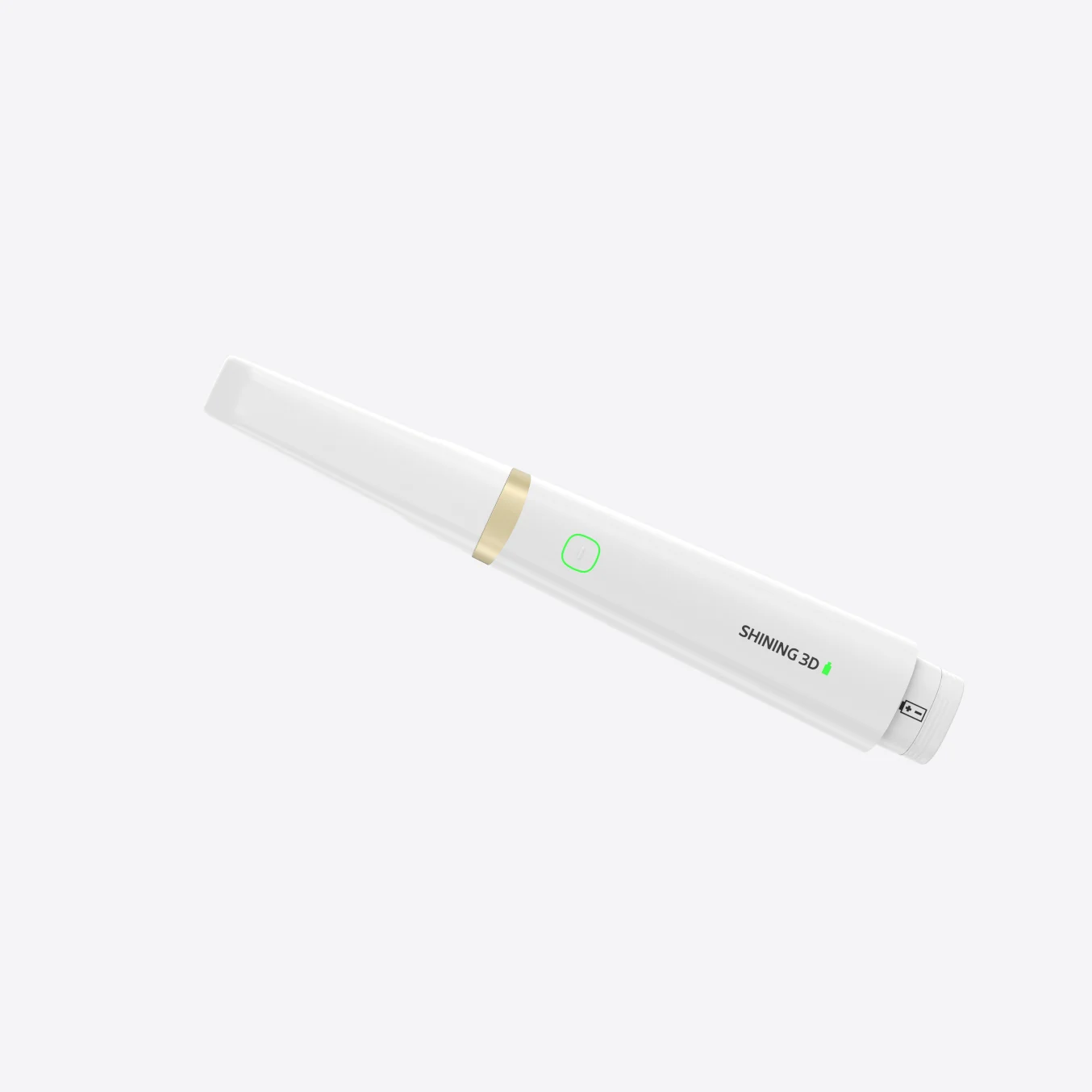
SHINING 3D DENTAL approaches digital dentistry through a connected Scan, Design, Print workflow, covering intraoral scanning, digital design, 3D printing, materials, and post-processing.
Before making an investment, evaluate where time and resources are currently being lost. If technicians spend too much time on repetitive design tasks, design support may have greater value than adding another production device. If production is frequently outsourced, in-house 3D printing may offer greater potential for improving turnaround and cost control.
Calculate ROI Beyond the Purchase Price
The initial equipment price is only one part of the investment calculation. A more useful ROI assessment should consider the total cost of ownership and the operational improvements that digital technology can create.
Start by examining several practical factors: equipment utilization, labor requirements, material consumption, outsourcing costs, maintenance, training, and expected case volume. Then compare these costs with measurable improvements such as shorter production times, reduced remakes, increased daily capacity, and fewer manual procedures.
For example, a scanner that reduces impression-related procedures may save clinical time while also improving the patient experience. A 3D printer may reduce dependence on external production for models, surgical guides, temporary restorations, or other applications. Similarly, design automation can help staff spend less time on repetitive tasks and more time managing cases that require professional judgment.
The key is to establish a baseline before implementation. Tracking turnaround time, production cost per case, remake rate, and monthly case volume makes it easier to determine whether an investment is producing the expected return.
Choose Solutions That Can Grow with Your Workflow
Digital dentistry is rarely a one-time investment. As case volume increases, clinics and laboratories may gradually expand into implant workflows, orthodontics, restorative dentistry, dentures, or more advanced applications.
For this reason, scalability should be part of the purchasing decision. A solution that works for today’s routine cases should ideally provide a pathway toward more applications without requiring a complete replacement of the digital infrastructure.
SHINING 3D DENTAL provides technologies across scanning, design, and printing, with applications covering areas such as prosthetics, implants, orthodontics, and dentures. Its design ecosystem also supports both AI-assisted workflows and professional design services for different case requirements.
This type of ecosystem can make it easier to expand digital capabilities gradually. Instead of investing in every possible technology at once, practices can prioritize the applications that generate the strongest immediate demand and build from there.
Reduce Repetitive Work Through Digital Design
Labor efficiency has a direct impact on ROI. Even when scanning and printing are fast, a workflow can remain inefficient if staff must perform numerous repetitive design or data-processing tasks manually.
Digital design platforms can address part of this challenge by simplifying routine workflows. SHINING 3D Dental Cloud, for example, provides an online environment for uploading scan data, managing cases, and entering the design workflow. Its AI Design option is intended to automate routine design tasks, while Classic Design provides more flexible support for cases requiring specific professional input.
This approach can help organizations allocate technical resources more effectively. Routine cases can follow a standardized process, while complex cases receive additional professional attention. The result is not simply faster software operation but a more structured use of staff time.
Consider In-House Production Carefully
Bringing production capabilities in-house can provide significant operational benefits, but the decision should be based on actual case demand.
A 3D printer may support applications including dental models, surgical guides, gingiva mask models, try-in restorations, and other components used in implant and restorative workflows. SHINING 3D DENTAL offers both DLP and LCD printing technologies, along with post-processing equipment and dental materials designed for different applications.
However, purchasing a printer does not automatically create ROI. Utilization matters. A device that sits idle for much of the month will have a very different financial outcome from one integrated into a consistent daily production workflow.
Before investing, estimate monthly case volume and determine which outsourced applications could realistically be brought in-house. Then compare external production fees, shipping costs, turnaround times, and internal operating costs.
Measure Efficiency After Implementation
ROI should not be evaluated only several years after purchasing equipment. Establishing operational KPIs from the beginning allows problems to be identified earlier.
Useful measurements include average case turnaround time, cases processed per employee, outsourcing expenditure, remake frequency, printer utilization, design time per case, and production cost. Patient-facing indicators such as appointment efficiency and treatment acceptance can also provide useful context.
Digital workflows can improve communication as well. SHINING 3D’s Dental Cloud supports case management and collaboration across locations, helping connect clinics and laboratories through a digital workflow.
Regularly reviewing these indicators can reveal whether the technology is being fully utilized or whether additional training, workflow adjustments, or equipment changes are necessary.
Build ROI Around Long-Term Workflow Value
The strongest return from digital dentistry solutions does not necessarily come from the most expensive equipment. It comes from matching technology to real operational needs.
For some practices, the priority may be faster digital impressions and improved patient communication. For others, design automation, implant workflows, or in-house 3D printing may provide greater value. The right investment depends on case mix, staff capabilities, production volume, and growth plans.
SHINING 3D DENTAL offers an integrated digital ecosystem designed to connect data acquisition, design, manufacturing, materials, and post-processing.
By evaluating the entire workflow rather than isolated devices, dental professionals can make more informed technology decisions. The goal is not simply to add more digital equipment, but to create a workflow that uses time, labor, materials, and clinical data more efficiently.
A well-planned digital strategy can turn technology investment into measurable operational value. By starting with workflow analysis, calculating total costs, selecting scalable digital dentistry solutions, and continuously tracking performance, practices and laboratories can build a more efficient foundation for future growth with SHINING 3D DENTAL.