
Modern Ethernet networks support much more than data transmission. They also carry power for IP cameras, wireless access points, VoIP phones, industrial controllers, and other connected equipment through Power over Ethernet (PoE). Because of this dual function, network hardware depends on carefully designed magnetic components that help maintain signal integrity while supporting electrical isolation.
When businesses evaluate an ethernet transformer manufacturer, they often focus on manufacturing capability, product consistency, and compatibility with different networking standards. These factors influence long-term system performance, especially in commercial and industrial networking projects where stable operation is expected.
Understanding the Role of Ethernet Transformers
An Ethernet transformer performs several important electrical functions inside a network interface. It provides galvanic isolation between connected devices, helping protect equipment from voltage differences while supporting reliable signal transmission. It also contributes to impedance matching, which helps reduce signal reflections across Ethernet cables.
In PoE applications, magnetic components must work alongside power delivery circuits without negatively affecting data communication. Engineers therefore consider insertion loss, return loss, isolation characteristics, and frequency response when selecting suitable components for network equipment.
Network transformers are commonly found in switches, routers, industrial gateways, surveillance systems, access control devices, and embedded communication boards. Although small in size, they are essential building blocks for stable network connectivity.
Why Product Consistency Matters for an ethernet transformer manufacturer
For OEMs developing communication equipment, product consistency is often as important as electrical performance. Small variations between production batches can influence automated assembly, soldering quality, and long-term reliability during continuous operation.
Manufacturers typically use standardized testing procedures to verify transformer parameters before shipment. Electrical testing, dimensional inspection, and material verification help maintain consistent performance across different production lots, which is especially valuable for large-scale equipment manufacturing.
Supply capability also becomes important during project deployment. Communication equipment manufacturers often require stable component availability over extended production cycles so that hardware revisions remain consistent throughout the product lifecycle.
Evaluating SMT Network Transformers for PoE Applications
Surface-mount transformers have become common because they support automated PCB assembly while reducing manual production steps. Their compact structure also helps designers optimize board space in networking products with increasing functional density.
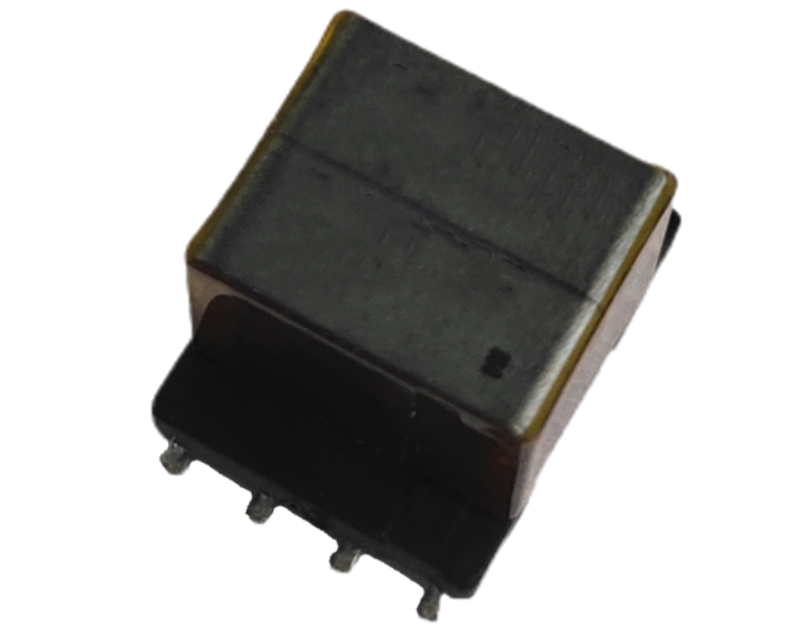
One example is the EP-492SG, which is designed for PoE applications. This model features dimensions of 10.2 × 10.0 × 10.5 mm, an SMT mounting type, inductance of 2, power rating of 5, and a 1:4 turn ratio. These specifications allow engineers to evaluate compatibility according to their own circuit architecture and communication requirements.
Rather than selecting a transformer only by size, engineers usually compare multiple electrical parameters with the target Ethernet controller, PCB layout, operating environment, and PoE design requirements to achieve balanced system performance.
Design Factors Beyond Basic Specifications
Selecting a network transformer involves more than reviewing a specification table. PCB layout, grounding strategy, differential pair routing, and connector placement all influence final communication quality. Even a properly specified transformer may deliver different results if surrounding circuit design is not optimized.
Electromagnetic compatibility is another consideration in commercial networking equipment. Good magnetic component design helps reduce unwanted interference while supporting stable signal transmission across different operating conditions.
Environmental factors should also be evaluated during product development. Temperature variation, continuous operation, vibration, and humidity can influence long-term equipment stability. Appropriate material selection and manufacturing control help improve reliability under these conditions.
Manufacturing Capabilities That Support OEM Communication Projects
Communication equipment developers frequently require customized magnetic components rather than standard catalog products. Differences in PCB layout, electrical architecture, and mechanical constraints often require modifications to magnetic designs during product development.
Mentech develops customized magnetic components for communication applications, including a comprehensive range of traditional LAN transformers as well as chip LAN transformers that are compatible with conventional network transformer applications.
Their manufacturing capabilities support various communication equipment development requirements while helping OEM customers integrate magnetic components into different hardware platforms.
Beyond communication products, Mentech also develops magnetic components for power modules, automotive electronics, and renewable energy systems. Their product portfolio includes high-frequency transformers, planar transformers, common-mode and differential-mode inductors, molded power inductors, automotive-grade transformers, and other magnetic solutions serving multiple industrial sectors.
Conclusion
Component selection should always begin with system requirements instead of individual specifications alone. Engineers generally define transmission standards, power requirements, board dimensions, assembly methods, and environmental conditions before narrowing suitable transformer options.
Technical communication between equipment designers and component suppliers can simplify product development. Early discussion regarding electrical requirements, mechanical constraints, testing methods, and production planning often helps reduce redesign work during later project stages.
As networking equipment continues expanding into industrial automation, intelligent buildings, transportation infrastructure, and edge computing, demand for reliable magnetic components is expected to remain important. Companies looking for an experienced ethernet transformer manufacturer may therefore consider not only component specifications but also engineering support, manufacturing consistency, and customization capability.
Within this field, Mentech provides communication magnetic products such as the EP-492SG alongside customized development services for OEM and industrial networking applications.